You know that exact moment of quiet disappointment. The kitchen windows are fogged tight against a damp November chill, and you are standing at the stove, wooden spoon in hand, peering into a pot of what should be a rich, soul-warming ragù. But when you lift the spoon to taste, a harsh, almost tinny brightness hits the back of your palate. It tastes thin. It tastes red, but not deep red. So, you squeeze another ribbon of Mutti Tomato Paste from the tube, stirring it directly into the simmering broth, hoping to force some depth into the pot. The depth never arrives.
You are not alone in this frustration. For generations, we have been subtly mistaught how to handle this dense, ruby-coloured concentrate. It is time to rethink your relationship with the tube.
The Perspective Shift: The Alchemy of the Rust
The most common mistake you can make with Mutti Tomato Paste—or any high-quality double-concentrated paste—is treating it like a liquid thickener. It is not ketchup. It is not a simple stir-in shortcut to make a pale sauce look robust. Think of it instead as a tightly coiled spring of raw flavour. When you simply drop it into a wet, simmering liquid, that spring remains locked. The paste waters down, bleeding its raw, acidic, and faintly metallic notes into your supper.
To fundamentally change your sauce, you must subject the paste to friction and heat. You must fry it.
I learned this years ago watching an older chef named Luca maneuver through a cramped, bustling kitchen in Montreal’s Mile End. A junior cook had just tried to squeeze a heavy dollop of paste straight into a pot of braising liquid. Luca stopped him immediately. “You have to wake it up,” Luca muttered, taking the tube. He pushed the meat and onions to the edges of the heavy skillet, pooled a generous glug of olive oil in the empty centre, and squeezed the paste directly into the shimmering fat. He let it sit, then scraped it back and forth. Within minutes, the kitchen smelled entirely different—sweet, toasted, and deeply savoury.
| Cook Profile | The Frustration | The Frying Benefit |
|---|---|---|
| The Weeknight Home Cook | Sauces taste thin and overly acidic. | Mellows the sharp bite into a rounded, slow-simmered sweetness. |
| The Sunday Batch-Prepper | Leftovers carry a lingering metallic aftertaste. | Cooks off the tinny edge, creating a stable, rich base for freezing. |
| The Braising Enthusiast | Gravies look pale and lack body. | Develops a dark, mahogany colour and heavy, umami-rich texture. |
The Maillard Ritual: How to Caramelize Your Paste
This is a physical, sensory process. It requires your full attention for about three to five minutes, but it pays dividends in the final dish.
Begin after you have sautéed your aromatics—your onions, celery, and carrots. Use your spatula to push them to the perimeter of the skillet, creating a bare circle in the middle.
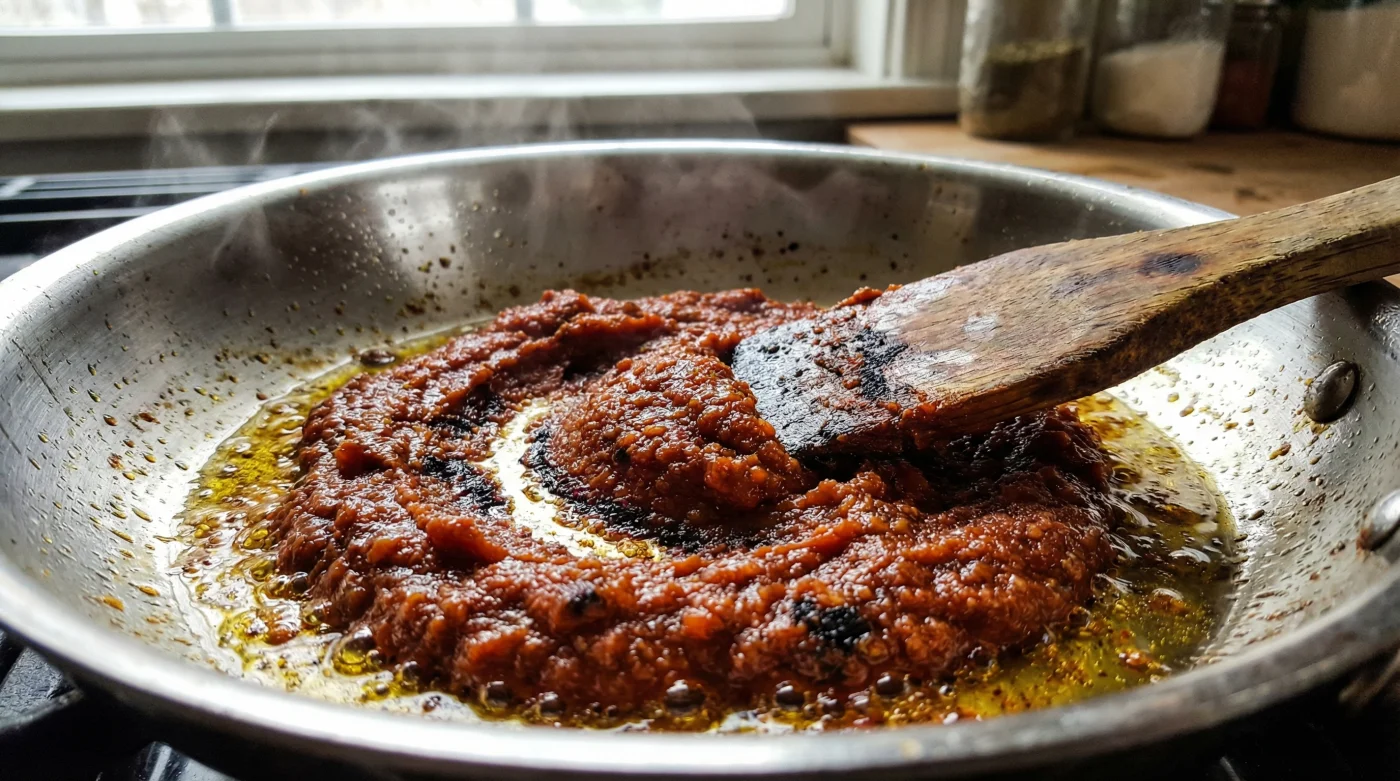
Add a tablespoon of good olive oil to that bare spot. Let it heat for a few seconds until it shimmers. Squeeze your Mutti Tomato Paste directly into the oil. It will immediately begin to sizzle and spit.
- LG OLED TV owners unlock peak brightness disabling this hidden energy toggle.
- Walmart Canada is quietly terminating free grocery pickup for minimum orders.
- Kikkoman Soy Sauce users ruin umami flavor ignoring this vital refrigeration rule.
- Hyundai Tucson owners prevent sudden battery drain disabling this hidden cellular transmitter.
- Crest Whitestrips users destroy enamel brushing immediately after this adhesion period.
Watch the colour. This is the crucial tell. The paste will shift from its raw, bright crimson to a dark, muted rust—almost the colour of an old brick. You will smell the change before you see it. The sharp, vinegary edge will burn off, replaced by a warm, roasted aroma.
| The Phase | The Chemistry | The Result on the Palate |
|---|---|---|
| Raw Paste in Tube | High concentration of citric acid and unactivated sugars. | Sharp, bright, slightly metallic and astringent. |
| Frying in Fat (180°C+) | Maillard reaction triggers; amino acids and sugars brown. | Acidity evaporates; deep umami and roasted sweetness develop. |
| Deglazing with Liquid | Fat-soluble flavour compounds distribute evenly through the water base. | A seamless, full-bodied mouthfeel with no separated bitter notes. |
Once you achieve that deep rust colour, you can finally drag your onions and garlic back into the centre, stirring everything together. Only then should you pour in your wine, broth, or crushed tomatoes to deglaze the pan. You have successfully built a foundation.
| Visual & Sensory Cues | What to Look For (Success) | What to Avoid (Mistakes) |
|---|---|---|
| The Colour | Dark mahogany, rust, or brick red. | Bright cherry red or pale crimson. |
| The Texture | Slightly grainy, clinging to the oil, parting cleanly from the pan. | Smooth, soupy, or instantly dissolving into surrounding liquids. |
| The Aroma | Sweet, toasted, smelling of dried fruit and rich earth. | Sharp, acidic, smelling strongly of raw tin or plain ketchup. |
The Bigger Picture: A Slower Rhythm for Better Suppers
It is easy to rush. When the day is long and the light fades early, the temptation to squeeze, stir, and walk away is strong. But taking those extra four minutes to stand by the stove, watching the oil bubble through the heavy red paste, does more than just fix a broken sauce.
It grounds you in the act of cooking. It reminds you that good food is not merely assembled; it is transformed. By paying attention to the skillet, by waiting for that exact shade of rust, you are practising a quiet form of culinary respect. You are ensuring that when you finally sit down to eat, the meal in your bowl tastes whole, heavy, and exactly as comforting as you needed it to be.
“To rush the paste is to build a house without a floor; take the time to let the heat do its quiet, heavy work.”
Frequently Asked Questions
Do I need to fry the paste if I am using a slow cooker?
Yes. A slow cooker does not reach the high temperatures required to trigger the browning process. Fry the paste in a skillet first, then transfer it to your slow cooker.Can I use butter instead of olive oil?
Olive oil is preferable because it can handle the higher heat without burning. Butter contains milk solids that may scorch before the paste fully darkens, leaving a bitter taste.How do I know if I have burned it?
If the paste turns black or smells like ash rather than toasted sugar, it has gone too far. You want a dark rust colour, not charcoal. Keep the heat at medium and keep it moving.Does this rule apply to canned paste as well as the tube?
Absolutely. Whether you are using Mutti in a tube or a standard tin, the raw product needs to be cooked out in fat to shed its metallic acidity.Can I add my garlic at the same time as the paste?
It is safer to add garlic during the final minute of caramelizing the paste. Garlic burns very quickly, and bitter, burnt garlic will ruin the base you just worked so hard to build.