You step into your Volkswagen Golf after a heavy October rainstorm sweeping off the coast of British Columbia. Instead of the familiar scent of German engineering and subtle leather, you are met with a heavy, musty wall of air. It smells faintly of a damp basement. You press your hand into the passenger-side footwell, and the floor mat squelches. Water. Your first instinct is to glare up at the sunroof, imagining a catastrophic failure of the rubber seals and a repair bill stretching into the thousands.
The Anatomy of a Misunderstood Drip
The most common myth in modern car ownership is that a sunroof is supposed to be a completely watertight vault. It isn’t. The rubber gasket bordering your glass is merely the first line of defence, a water manager rather than a submarine hatch. Think of your roof as having a network of hidden veins. Water is actually designed to slip past that initial seal, enter a concealed metal trough, and travel down unseen plastic tubes routed through the A-pillars—the metal framing beside your windscreen—before safely exiting near the door hinges.
When these narrow veins clog with acidic pine needles, fine road dust, and sticky spring pollen, the water backs up. With nowhere else to go, it eventually spills over the edges of the roof liner, pooling silently behind your dashboard and settling into the lowest point of the cabin: your carpet.
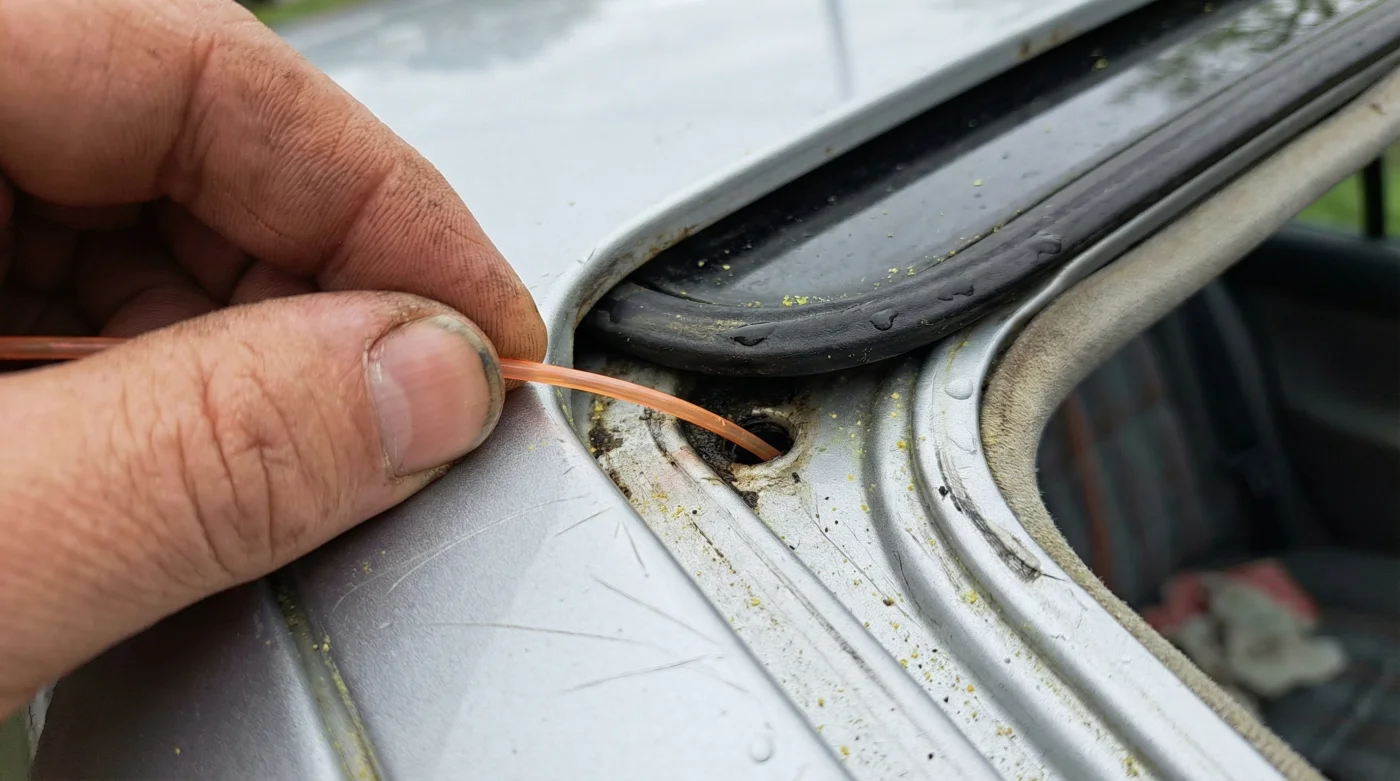
I learned the reality of this design from Dieter, a silver-haired independent Volkswagen mechanic operating out of a cinderblock garage in Mississauga. He has spent over three decades diagnosing wet floors and chasing electrical gremlins caused by trapped moisture. He calls the dealership’s immediate impulse to replace the outer sunroof seal ‘an expensive bandage for a dirty pipe.’ During one visit, he pointed to a bright orange coil of smooth weed-whacker line hanging on his pegboard. ‘You do not need new rubber,’ he told me, wiping grease from his hands. ‘You just need to give the car’s arteries a gentle sweep.’
| Driver Profile | Specific Maintenance Benefit |
|---|---|
| Commuter parking under large canopy trees | Prevents sap-covered pine needles from creating a watertight dam in the roof cassette. |
| City driver navigating dusty construction zones | Stops fine grit from mixing with morning dew to form hardened mud plugs. |
| Used Golf buyer inheriting older maintenance | Avoids inheriting a mould-infested interior and corroded wiring harnesses. |
| System Component | Mechanical Function | Common Failure Point |
|---|---|---|
| Sunroof Cassette Trough | Catches all rainwater that intentionally bypasses the glass seal. | Overflows directly onto the interior headliner when exit holes are blocked. |
| Front Drain Holes (Left/Right) | Funnel collected water downward into the A-pillar tubing. | Clogs at the very top opening due to larger debris like leaves. |
| A-Pillar Tubes | Carries water safely down behind the dashboard structure. | Internal blockages from accumulated sludge or kinks in the aging plastic. |
| Nipple Exits (Door Jamb) | Drains water safely outside the cabin onto the pavement. | The rubber spider valve sticks completely shut as the material degrades. |
| Quality Maintenance Checklist: What to Look For | What to Avoid |
|---|---|
| A clear, immediate puddle under the front doors after pouring a cup of water into the open track. | Water pooling lazily in the track or draining at a slow, agonizing drip. |
| A clean, intact rubber valve in the door hinge area that opens when squeezed softly. | Snipping the valve entirely off, which invites highway wind noise and tiny insects. |
| Using a smooth, flexible nylon weed-whacker line (0.065 to 0.080 inch thick). | Shoving stiff metal coat hangers down the hole, which easily punctures the plastic tubing. |
Clearing the Path Without Causing Harm
- Sun Life Financial policyholders jeopardize disability claims skipping this mandatory physician update.
- Garmin Forerunner users double battery lifespan disabling this specific ambient sensor setting.
- Volkswagen Golf drivers prevent sunroof leaks clearing this specific hidden drainage channel.
- Amazon Prime Canada is quietly enforcing minimum thresholds for standard expedited shipping.
- Quaker Oats preparers guarantee creamier textures executing this mandatory dry toasting phase.
Take roughly two metres of smooth nylon weed-whacker line. You must avoid wire or unraveled coat hangers at all costs; rigid metal will quickly puncture the fragile, aging plastic tubes, routing water directly into your fuse box and turning a simple clog into a nightmare. Smooth nylon offers the exact combination of stiffness and flexibility required to navigate the bends of the A-pillar.
Feed the line gently down into the drain hole. Twist the string slowly between your thumb and forefinger as you push. Think of this motion as guiding a heavy thread through a long needle, not forcing a ramrod down a barrel. You will eventually feel a soft resistance where the sludge has settled.
Keep twirling the line softly, applying only mild downward pressure until it breaks through the muck. Step back and check the inner door hinge area; you should see the bright tip of the weed-whacker line peeking out from the rubber exit nipple. Once cleared, carefully pour a small cup of warm water—around thirty degrees Celsius—into the upper trough to flush out the remaining debris and confirm a rapid, steady flow.
Reclaiming the Rhythm of Your Drive
There is a profound satisfaction in understanding the subtle mechanics of the machine that carries you through life. By learning how your vehicle handles the elements, you stop being a passenger to unexpected repair bills and start being a caretaker. A ten-minute routine performed each autumn and spring ensures your interior remains a dry, quiet sanctuary.
You no longer have to dread the sound of heavy rain drumming against the roof. Instead of worrying about invisible water damage creeping into your upholstery, you can simply enjoy the comforting rhythm of the storm around you. You restore the peace of mind required to tackle a sudden squall on the highway, knowing the hidden pathways are clear and the water is flowing exactly where it belongs.
A car breathes and sweats just like we do; keeping its hidden pathways clear is the purest form of preventative maintenance.
Frequently Asked Questions
Why does my car smell like damp laundry even when it has not rained recently?
Moisture trapped in the thick carpet underlay takes weeks to dry naturally. If the A-pillar tubes are severely clogged, previous rainwater is still lingering in the floorboards, slowly releasing a musty odour.
Can I use an air compressor to blow out the drain tubes?
Please avoid this entirely. High-pressure compressed air can easily blow the rubber tubing completely off the sunroof cassette inside your roof liner, creating an impossible leak to fix without removing the entire ceiling.
How often should I clean these drains on my Golf?
If you park outdoors, make this a biannual ritual. Perform a quick sweep once in late autumn after the heavy leaves fall, and once in spring after the sticky tree pollen drops.
What thickness of weed-whacker line is the safest to use?
A standard 0.065-inch or 0.080-inch round nylon line is perfectly suited for this task. It is stiff enough to push through heavy sludge but soft enough to navigate sharp corners without tearing the internal rubber.
Do the rear sunroof drains clog as frequently?
Yes, though they are less prone to heavy leaf buildup. They exit behind the rear bumper, making them slightly harder to reach from the bottom, but pouring warm water down the rear track usually clears minor dust accumulations.