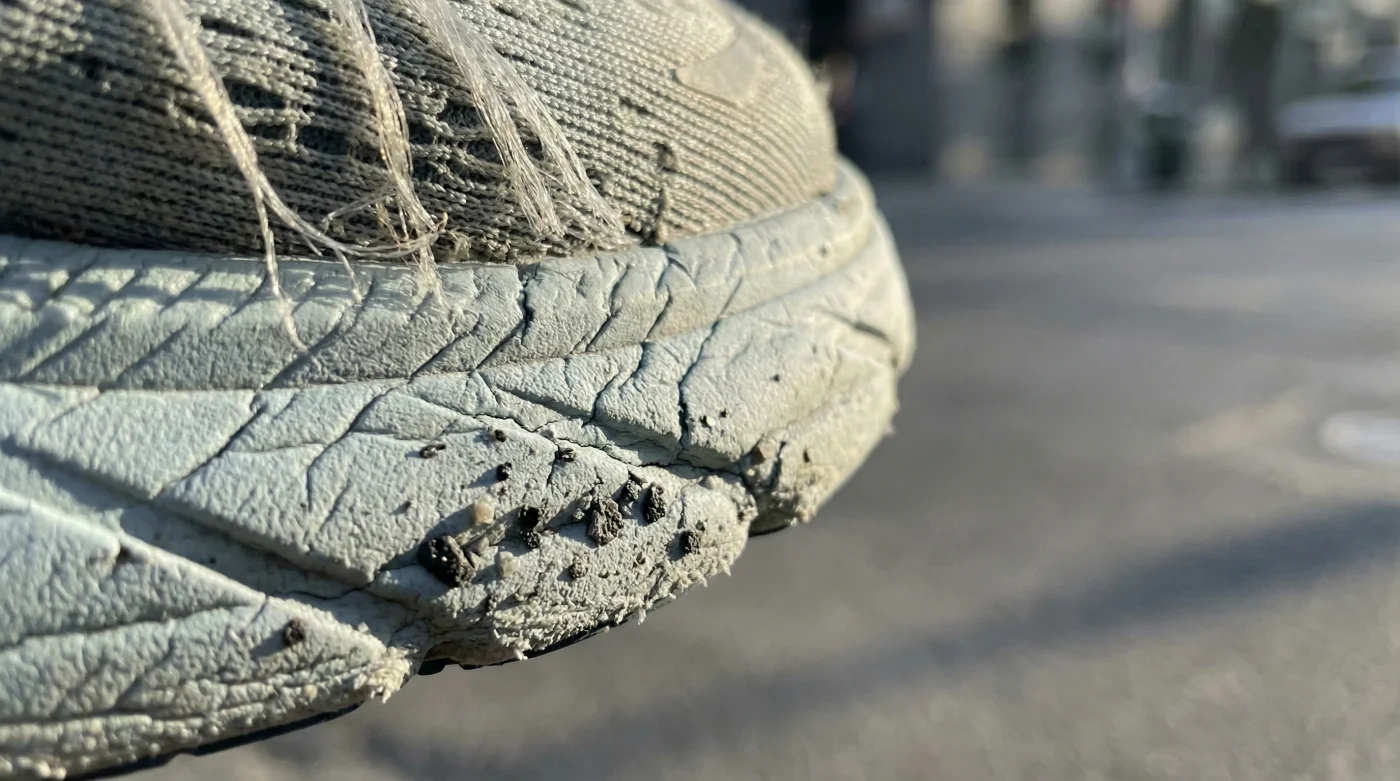
The air is crisp as you step out for a morning run, the rhythmic slap of rubber hitting damp pavement settling you into your pace. The feeling of slipping into a fresh pair of Hoka Cliftons is undeniable—it feels like pressing your foot into a thick, supportive marshmallow. You trust that massive stack of foam to eat the shock of the road, keeping your joints safe as the miles pile up.
But fast forward a few months into your training block. The morning routine remains unchanged, yet a subtle, hollow ache begins to bloom right below your kneecap. You brush it off as typical fatigue, trusting the thick profile beneath your feet to continue doing its job. You are still sinking in, but the vital rebound has quietly vanished.
We are conditioned to believe that big, chunky midsoles protect us indefinitely. Looking at the sheer volume of EVA foam, it is easy to view it as an impenetrable armour plate against the unforgiving tarmac. We trust the visual bulk over the invisible structural integrity, assuming that as long as the rubber tread holds, the shoe is fine.
The reality of modern running technology is far more ruthless. The very feature designed to coddle your joints eventually turns into a hidden liability. Maximum cushion becomes maximum impact the moment that cellular structure silently collapses under the weight of your weekly mileage.
The Physics of the Foam Trap
Think of your shoe’s midsole like a microscopic, living honeycomb. When fresh out of the box, those millions of tiny gas-filled pockets absorb the shock of your landing, compressing smoothly before springing rapidly back into their original shape. This energetic return is what makes a new shoe feel so alive.
As you cross an invisible threshold—usually hovering right around the 300-mile mark—those cellular walls begin to fracture and fail. The cellular foam turns to dead weight, permanently compressed in the exact, unyielding shape of your foot strike, offering zero dynamic support.
Here lies the paradox of maximum cushion running footwear: when a thin, minimalist shoe degrades, you feel the hard ground immediately and instinctively adjust your gait to soften the blow. When a high-stack shoe dies, the surface still feels deceptively soft to the touch, but it bottoms out abruptly upon impact. You are effectively stepping onto a plush pillow resting directly on a concrete slab.
Because the shoe looks and feels thick, your brain anticipates a protective bounce that never arrives. Your knees absorb the shock entirely because your muscles have not been triggered to brace for the sudden, harsh deceleration hidden beneath that soft facade.
“It is the silent killer of autumn marathon training,” explains Clara Vance, a 42-year-old sports physiotherapist based in Vancouver who spends her days rebuilding runners’ shattered patellar tendons. Clara noticed a bizarre trend in her clinic: a sudden spike in joint pain among athletes wearing the most protective footwear on the market. She realised they were being lulled into a false sense of security, running on shoes that looked identical to the day they were bought, but internally possessed the shock absorption of a wet cardboard box.
Profiling Your Impact Risk
Not all miles degrade foam equally. Your specific running environment, body mechanics, and local climate dictate precisely when that honeycomb structure will surrender. Understanding your personal risk profile changes how you track your gear.
The heavy heel-striker faces the most immediate risk of foam collapse. If you land with a pronounced thud, sending vibrations straight up your tibia, the heel stack compresses violently with every single step, permanently crushing the foam long before the tread wears smooth.
The Pavement Pounder
If your daily route consists entirely of unforgiving concrete paths or rigid asphalt roads, the sheer repetitive trauma accelerates this cellular breakdown. The energy return drops exponentially as you near 250 miles, forcing your joints to compensate for the work the shoe is abandoning.
- TP-Link router users eliminate dead zones pointing antennas in this perpendicular layout.
- Leatherman Wave owners deploy hidden tools pushing this precise locking mechanism.
- Patagonia Down Sweater owners restore loft washing with these specific tennis balls.
- Hoka Clifton runners prevent knee strain calculating this exact foam compression limit.
- Lodge Cast Iron chefs achieve nonstick perfection baking multiple thin flaxseed coats.
The Treadmill Tactician
Indoor running offers structural reprieve. The moving belt of a treadmill actually absorbs a fraction of the impact, artificially extending the life of the midsole. In this controlled environment, you might push slightly past 300 miles before the structural integrity fully compromises your knees.
Calculating the Compression Limit
You do not need a laboratory to measure the health of your midsoles. You only need to pay close attention to a few tactile warnings, establishing a mindful connection with the tools you use to protect your body.
The transition from protective gear to injury hazard happens quietly, without any visual tears or blown-out seams. Trust your physical sensations first, long before you check the odometer on your digital tracking app.
Practice the ‘thumb test’ once a week. Press your thumb firmly into the side of the foam, right where the wrinkles naturally form from compression. It should fight back against your pressure, not cave inward like a loaf of stale bread.
Notice how your body feels the morning after a run. If your ankles and knees carry a dull, throbbing ache following an easy recovery jog, the shock absorption is gone, regardless of how pristine the upper mesh looks.
- Track your shoe mileage manually or via GPS apps; set a hard alert at 250 miles to begin testing the foam.
- Perform the visual compression check: place the shoe on a flat table and look at the heel from behind. If it leans heavily inward or outward, the internal structure has failed.
- Press directly into the centre of the heel tread with your thumbs. A dead shoe will feel entirely rigid underneath the rubber.
- Keep a ‘rotation’ pair. Switching between two pairs gives the foam 48 hours to fully decompress and recover its cellular shape.
The True Cost of Comfort
We cling to old shoes because they feel like old friends. They have molded to our specific quirks, survived our longest weekend runs, and carried us through moments of absolute physical exhaustion. Discarding a shoe that still looks perfectly fine feels wasteful.
But loyalty to a dying midsole is a fast track to the physio table. Accepting this expiration date fundamentally changes your relationship with your running gear. It stops being an emotional attachment and becomes a precise, calculated tool for self-preservation.
When you respect the 300-mile limit of maximum cushion footwear, you stop fighting against your equipment. You allow the shoe to protect you while it is capable, and you let it go the moment it becomes a liability to your joints.
Running becomes less about enduring random pains and more about maintaining structural balance. You preserve your knees entirely by simply refusing to let the foam lie to you.
“A shoe is only as protective as its ability to spring back; once it stays flat, your joints are doing all the heavy lifting.” — Clara Vance, Sports Physiotherapist
| Key Point | Detail | Added Value for the Reader |
|---|---|---|
| 0-150 Miles | Prime cellular elasticity within the EVA foam. | Maximum joint protection, high energy return, and pain-free distance running. |
| 150-250 Miles | Partial compression set; foam begins to mold to foot. | Highly personalized fit, but a noticeable slight drop in responsive bounce. |
| 300+ Miles | Total structural collapse of the midsole honeycomb. | Hidden impact spikes; immediate replacement prevents chronic knee and hip strain. |
Frequently Asked Questions
Can I extend the life of my Hoka Cliftons by only wearing them for running?
Yes. Walking in running shoes compresses the foam differently and keeps the cells under constant pressure. Keep them strictly for your runs to preserve the bounce.Do heavier runners need to replace their maximum cushion shoes sooner?
Absolutely. Greater mass means more force applied to the foam structure per step. If you are a heavier runner, start checking your midsoles around the 200-mile mark.Why do my knees hurt in max cushion shoes but not in firmer ones?
Dead max cushion shoes bottom out abruptly, causing a sharp shock wave. Firmer shoes keep your foot closer to the ground, naturally encouraging your muscles to brace for impact.Is there a way to restore the foam once it has compressed?
No. Once the microscopic gas pockets in EVA foam fracture and collapse, the damage is permanent. Letting them rest for 48 hours helps slow the degradation, but cannot reverse it.What should I do with my retired running shoes if they still look new?
Repurpose them for gardening, casual walking, or donate them. They are no longer safe for the repetitive, high-impact force of running, but they still offer basic foot cover for low-impact chores.