The kitchen is still cold, the frost holding tight to the windowpane while the kettle begins its low, rhythmic rumble. You measure out coarse dark grounds, dumping them into the familiar glass cylinder of the French press. It feels like muscle memory, a morning chore executed before the brain fully wakes up.
Water meets coffee, blooming into a thick, fragrant crust of wet earth and toasted nuts. You wait the standard four minutes, grab the lid, and push the metal mesh down. It is exactly what the box told you to do, but it is also the exact moment the extraction fails, forcing a muddy, chalky sediment directly into your morning cup.
That thick sludge at the bottom of your mug is something we’ve collectively accepted as the price of a heavy-bodied coffee. We sip carefully, leaving the last half-inch of liquid untouched to avoid that dry, bitter finish coating the tongue like wet ash. But that grit isn’t a mandatory feature of the brewing method.
The industry standard instructions printed on every box are fundamentally flawed, treating the press like a mechanical juice squeezer. By plunging immediately through the heavy crust, you are violently churning the smallest, most bitter particles right into the finished liquid, ensuring a harsh, over-extracted final sip that ruins the delicate flavours.
The Illusion of the Plunge
Think of a French press not as a filter, but as a quiet pond. When you forcefully drive a metal screen through the water, you stir up the mud at the bottom. The secret to a perfectly transparent, sweet cup of coffee relies on gravity, patience, and a slight intervention at the surface.
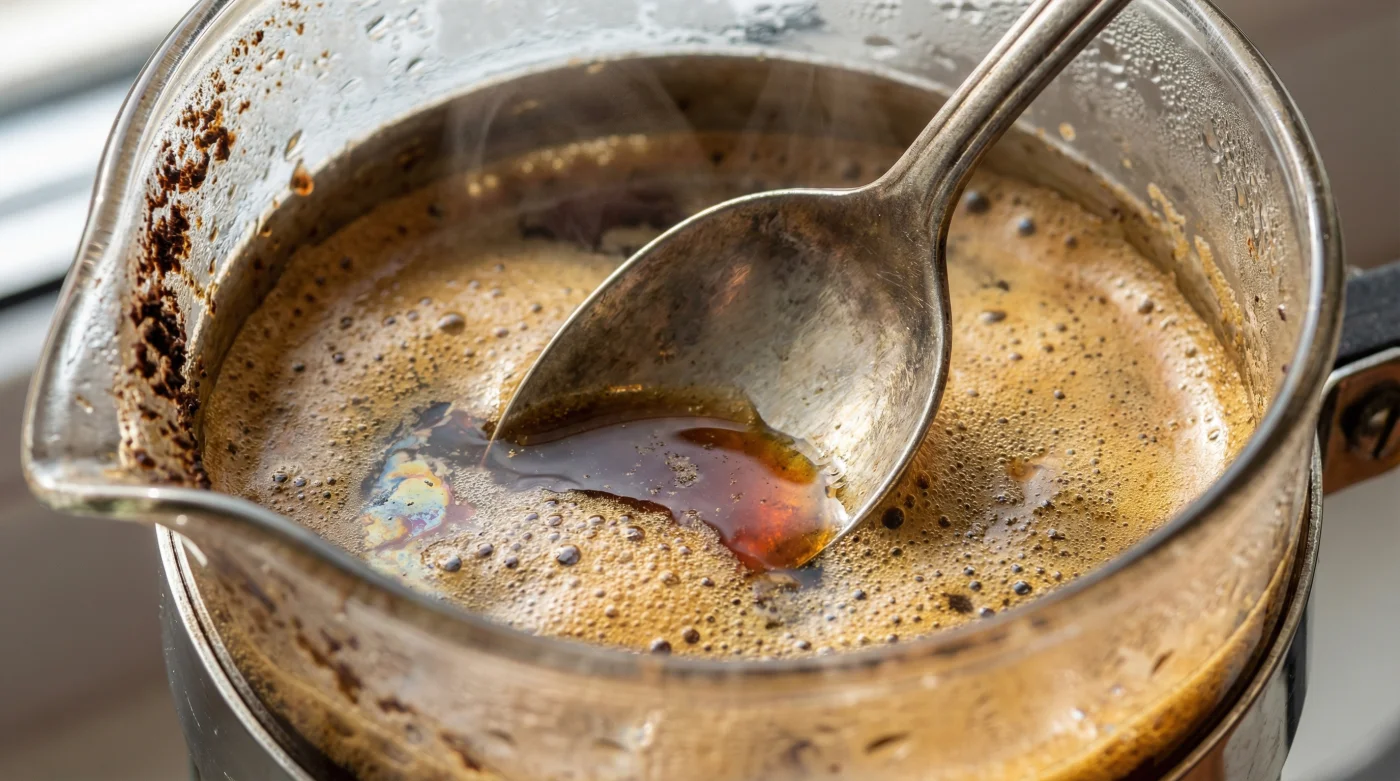
Instead of mashing the coffee down, you must address the crust that forms at the top. This raft of floating grounds traps carbon dioxide and holds onto the microscopic fines. Breaking that crust with a spoon allows the heavier grounds to gently sink, leaving only a thin, pale foam behind on the surface.
Marcus Tremblay, a 42-year-old café owner operating out of a tiny brick space in Montreal’s Mile End, watches his new customers violently hammer down plungers every morning. He winces every time. “They treat the press like a garbage compactor,” he says, leaning over his tasting counter. He insists that his staff use the skim method—stirring the crust and scooping away the top foam before serving—proving that a simple metal press can yield coffee as bright and clean as a paper-filtered pour-over.
This minor tactile modification changes everything. That pale foam floating on top holds all the insoluble bitter fines and trapped oils that cause acidity to spike. Scooping it away with a pair of spoons eliminates the harsh sludge entirely, leaving behind a heavy, syrupy body without the sandy texture.
Adapting the Skim for Your Routine
Not every morning allows for a slow, meditative brewing process. But removing the bitter fines doesn’t require a complicated laboratory setup; it simply asks you to reallocate the thirty seconds you normally spend wrestling with a stubborn plunger.
For the weekday commuter facing a cold drive ahead, speed matters. You can still pour your water, wait four minutes, and give the crust a firm stir. Even if you skip the long settling phase, just scraping the top bubbles off will noticeably sweeten the dark roast, saving you from that mid-morning stomach ache.
- Hyaluronic acid serums dehydrate facial skin without this immediate occlusive moisturizing layer.
- Subaru Outback engines consume massive oil skipping this specific PCV valve replacement.
- HEPA air purifiers circulate trapped dust ignoring this mandatory mesh pre-filter vacuuming.
- French press coffee drinkers extract bitter sludge skipping this essential skimming step.
- Apple TV remote users eliminate scrolling lag applying this simple directional tape.
When you finally pour, the plunger never actually touches the coffee bed. You only press the screen down a single inch to act as a rudimentary strainer. The resulting liquid pours out with absolute, brilliant clarity, completely free of the dusty sediment that normally coats your teeth.
The Mechanics of Clarity
Implementing this technique requires no new equipment, only a shift in timing. It is a mindful process of subtraction. You are no longer forcing the water through the coffee; you are letting the water release the coffee.
Gather your usual tools: the glass press, your favourite mug, and two standard soup spoons. Ensure your water is around 94 Celsius—just off the boil—to extract the sugars without burning the coarse grounds.
- The Pour: Aggressively pour water over the coarse grounds to saturate them completely. Let it sit untouched for exactly four minutes.
- The Break: Take a spoon and gently stir the thick crust at the surface. You will see the heavy grounds immediately drop to the bottom.
- The Skim: Using two spoons, carefully scoop the pale, bubbly foam left on the surface and discard it in the sink. This foam holds the bitterness.
- The Rest: Wait another five minutes. Do not move the glass carafe. Let gravity do the work.
- The Pour: Insert the plunger just below the surface of the liquid. Do not plunge to the bottom. Pour slowly and steadily into your mug.
Beyond the Morning Caffeine Hit
It seems almost ridiculous to care so deeply about a few spoonfuls of foam. We are conditioned to rush, to consume our morning fuel while tying our shoes or starting the car. Taking an extra five minutes to skim a glass cylinder feels like a luxury of time most people believe they cannot afford.
But fixing this flawed industry standard gives you a small moment of quiet control before the day demands your attention. It turns a rote, sloppy chore into a deliberate act of care. Drinking a cup that is smooth, sweet, and perfectly clear sets a different tone for the hours ahead.
You realize that the tools you use every day often have hidden potential, masked by poor instructions written for convenience rather than quality. Once you stop forcing the plunge and start skimming the surface, the standard method suddenly feels archaic.
You will never look at that metal mesh screen the same way again. By respecting the process and letting the grounds settle on their own, you transform a notoriously muddy brewing method into something capable of profound nuance.
“Great coffee doesn’t come from forcing water through beans; it comes from knowing exactly what to take away before it hits the cup.”
| Brewing Stage | The Standard Method | The Skimming Method (Added Value) |
|---|---|---|
| The Four-Minute Mark | Plunging the crust forcefully to the bottom. | Breaks the crust to sink heavy grounds, keeping fines separated. |
| Handling the Foam | Ignored, pushed into the liquid, increasing bitterness. | Scooped and discarded, entirely removing the chalky texture. |
| The Final Pour | Cloudy, sludgy, requires leaving the last sip behind. | Produces a crystal-clear, sweet cup you can drink to the last drop. |
Common Brewing Questions
Does waiting another five minutes make the coffee cold?
Because the glass carafe is full of near-boiling water, the thermal mass keeps it incredibly hot. By the time you pour, it will be at the perfect drinking temperature without burning your tongue.Can I still use a fine grind for this method?
A medium-coarse grind is ideal. A fine grind will suspend too many particles in the water, making it harder for gravity to pull them down, even after you skim the top.Why do two spoons work better than one for skimming?
Using two spoons allows you to pinch the foam together from the edges of the glass, lifting the bitter fines out cleanly without overly agitating the liquid beneath.Is this the same as the James Hoffmann method?
It shares the exact same core logic. Renowned coffee experts advocate for this surface skimming and long steep because it respects the physical properties of extraction.Should I still clean the metal mesh filter?
Yes. Even though you are only pressing the filter down an inch into the liquid, coffee oils quickly turn rancid on metal. Wash it with warm soapy water after every use.